
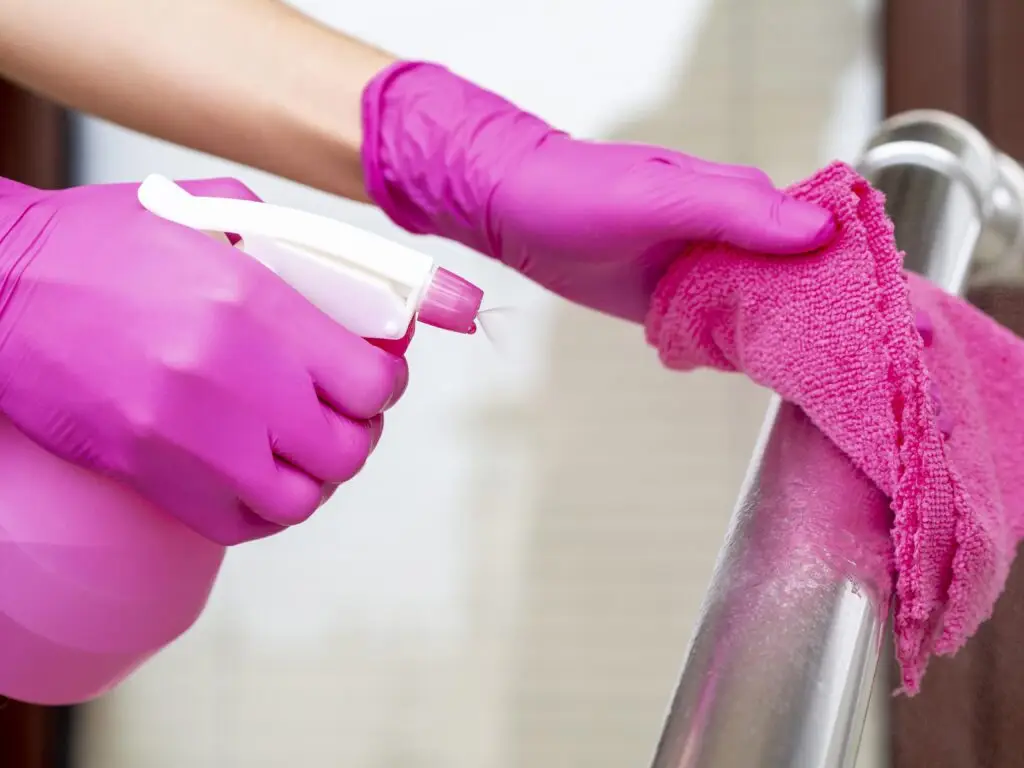
In the world of home maintenance, these three terms are often used interchangeably, but they refer to completely different levels of hygiene. Understanding the distinction isn’t just about semantics—it’s about knowing how to keep your home truly safe and healthy for your family. If you’ve ever wondered why your kitchen counter doesn’t feel “deeply clean” after a quick wipe, or why some products require you to leave them on a surface for ten minutes, this guide is for you.
Quick Answer: The Hygiene Hierarchy
Think of it as a three-step process: Cleaning is the removal of physical soil (dirt, dust, grease). Sanitizing is the act of reducing bacteria on a surface to a “safe” level by public health standards. Disinfecting is the most rigorous process, intended to kill specific pathogens, viruses, and fungi on nonporous surfaces. You cannot properly sanitize or disinfect a surface that hasn’t been cleaned first.
1. Cleaning: The Foundation
Cleaning is the mechanical process of removing visible “stuff”—dirt, grease, dust, and food residue—from a surface.
- How it works: It uses soap, water, and friction (scrubbing or wiping) to lift debris and wash it away.
- Why it matters: You cannot disinfect a surface covered in a layer of grime. The grime acts as a shield, preventing sanitizers and disinfectants from ever reaching the surface they are intended to treat. Cleaning is always the essential first step.
2. Sanitizing: Reducing the Risk
Sanitizing aims to lower the number of germs on a surface to a level considered safe by public health standards. It is often used for surfaces that come into contact with food or human skin.
- How it works: It uses heat or chemicals to reduce microbial life.
- Best for: Kitchen cutting boards, dining tables, and high-chair trays.
- The Pro Tip: Always check the product label for “contact time.” Sanitizers often need to sit on the surface for a specific period to do their job.
3. Disinfecting: Killing the Pathogens
Disinfecting is the heavy hitter. It uses harsh chemicals to kill specific germs (like flu viruses or E. coli) on nonporous surfaces like stainless steel, glass, or plastic.
- How it works: It utilizes chemical compounds designed to destroy the cellular structure of pathogens.
- The “Dwell Time” Rule: This is where most homeowners fail. Disinfectants are not “spray and wipe” products. To be effective, the surface must remain wet with the solution for the full “dwell time” specified on the bottle—sometimes as long as 10 minutes. If you wipe it off too soon, you’re just moving germs around.
When to Use Each Method at Home
| Method | Goal | Best For |
| Cleaning | Remove dirt/soil | Daily spills, dusty shelves, floors |
| Sanitizing | Reduce bacteria | Cutting boards, food prep areas, toys |
| Disinfecting | Kill germs | Toilet handles, light switches, faucet knobs |
Frequently Asked Questions
- Do you need to clean before disinfecting?
Absolutely. Think of it like washing your hands: you wouldn’t put hand sanitizer on muddy hands. Cleaning removes the physical barrier, allowing the disinfectant to work on the actual surface. - Is sanitizing the same as disinfecting?
No. Disinfecting is a higher level of protection. A sanitizer reduces bacteria to safe levels, while a disinfectant is designed to destroy a broader range of viruses and bacteria. - What surfaces should be disinfected most often?
Focus on “high-touch” zones: doorknobs, light switches, faucet handles, and your phone screen. These are the areas where germs are most likely to transfer from your hands to your environment.
Comparison Chart: The Hygiene Cheat Sheet
| Feature | Cleaning | Sanitizing | Disinfecting |
| Primary Agent | Detergent + Friction | Heat or Light Chemical | Strong Chemical |
| Pathogen Kill | Minimal/None | Significant Reduction | Total (for labeled germs) |
| Daily Routine | Every Day | As Needed | When Sick/High Traffic |
Need a professional touch to keep your home healthy?
There is a difference between a home that looks clean and a home that is professionally sanitized. At Asubra Cleaning, we apply the correct method—cleaning, sanitizing, or disinfecting—to the right surface at the right time. Let our experts manage the hygiene of your home so you can focus on living in it.
Click here to schedule your professional cleaning service with Asubra Cleaning!