Living with cats or dogs brings endless companionship, joy, and love to a home, but it also brings a constant companion of a different kind: pet hair. No matter how clean you keep your kitchen counters or how neatly your bed is made, stray hairs inevitably settle onto floors, weave into upholstery, tumble across rugs, and gather in quiet corners and baseboards.
Managing pet shedding doesn’t have to feel like a full-time job. With the right tools, smart daily habits, and a targeted cleaning strategy, you can easily conquer pet hair and keep your living spaces fresh and fur-free without spending hours with a vacuum every single day.
Why Pet Hair Is Hard to Control
Hair sticks to fabric, static-prone surfaces, rugs, and corners.
Pet hair carries tiny static charges and features microscopic barbs or scales that allow it to cling tenaciously to woven fabrics, carpets, and synthetic fibers.
Daily movement spreads pet hair from room to room.
Air currents from HVAC systems, ceiling fans, and the simple foot traffic of humans and animals constantly lift loose fur, carrying it from pet beds into every corner of the house.
Why homes with pets often need more frequent vacuuming and dusting.
Fur acts as a magnet for airborne dust and dander. Because shedding is a continuous, year-round cycle, homes with pets require more frequent, structured cleaning routines to prevent allergen buildup.
Best Tools for Pet Hair Removal
Vacuum with pet hair attachment.
A vacuum equipped with a motorized brush roll or specialized rubber pet hair tool is essential for pulling embedded fur out of deep carpet fibers and fabric upholstery.
Microfiber cloths and dusters.
Electrostatic microfiber grabs floating fur and dust like a magnet instead of letting it drift back into the air.
Rubber gloves or squeegees for upholstery.
Donning a pair of damp rubber dishwashing gloves or pulling a small window squeegee across a fabric sofa rolls pet hair into easy-to-grab clumps instantly.
Lint rollers for quick touchups.
Compact lint rollers are perfect for fast, on-the-go touchups on throw pillows, lampshades, and clothing right before heading out the door.
Tools that spread hair instead of capturing it.
Avoid using dry feather dusters or standard brooms on hard floors. They lack electrostatic attraction and simply toss lightweight pet hair and dust back up into the air, where it resettles elsewhere.
Room-by-Room Pet Hair Cleaning Method
Floors: vacuum slowly and use the right setting.
When vacuuming hardwood, tile, or carpet, move your vacuum head slowly. Rushing over pet hair allows suction to miss hairs that are anchored to floor crevices. Adjust your vacuum height setting correctly based on your flooring type.
Furniture: remove hair before treating stains or odors.
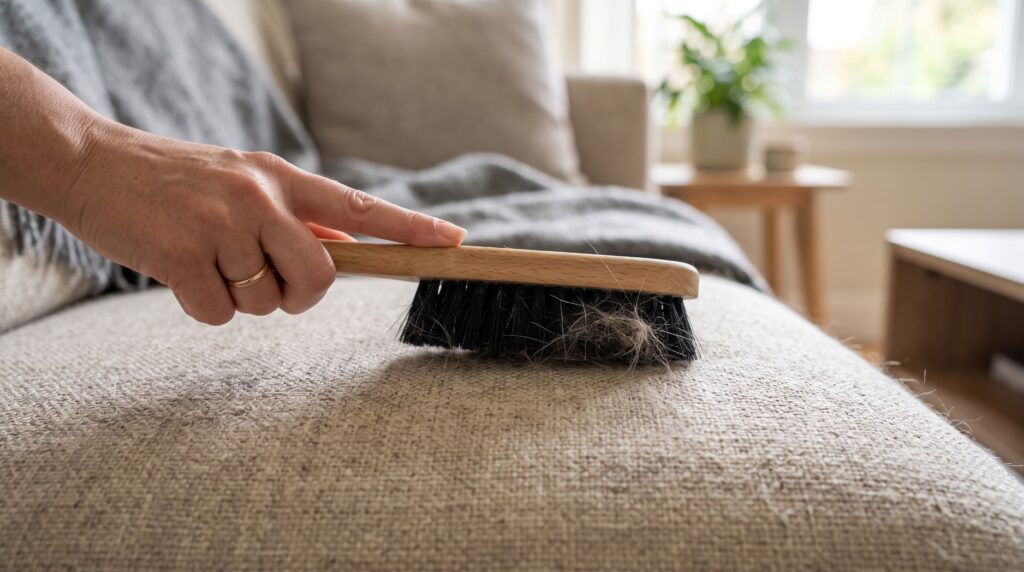
Always lift pet hair off your sofa or armchairs using a rubber squeegee or pet brush before applying liquid upholstery cleaners or fabric refreshers, which can turn loose fur into a muddy paste.
Corners and baseboards: use attachments before mopping.
Run a vacuum crevice tool along baseboards and wall corners to suck up trapped fur bunnies before you mop, preventing wet clumps from sticking to your baseboards.
Rugs and carpets: vacuum in multiple directions.
To lift fur deeply embedded in high-pile rugs, vacuum the area moving north-to-south, and then cross over it moving east-to-west to loosen stubborn strands.
How to clean pet hair before guests arrive.
Do a quick 10-minute sweep of high-visibility zones: use a damp rubber glove on the main sofa, run a lint roller over accent pillows, and do a quick pass of the entryway rug.
Quick weekly checklist for pet-friendly homes.
- [ ] Vacuum high-traffic carpets and rugs thoroughly
- [ ] Wipe down hard floors with a microfiber mop or vacuum attachment
- [ ] Remove pet hair from fabric upholstery and favorite lounging spots
- [ ] Wash pet bedding and blankets in warm water
- [ ] Dust ceiling fans, baseboards, and low surfaces, incorporating insights from our dust control guide
Note: Tie the topic to recurring cleaning for families with pets.
Managing pet dander and fur is an ongoing commitment. Establishing a predictable cadence of chores keeps allergens low and maintains a healthier indoor climate, making recurring maintenance cleaning an invaluable support system for busy pet parents.
How to Reduce Pet Hair Between Cleanings
Brush pets regularly.
Grooming your cat or dog outdoors or in an easy-to-clean mudroom several times a week removes loose fur right at the source before it ever hits your furniture or floors.
Wash pet bedding.
Wash your pet’s blankets, beds, and soft toys weekly in hot water to eliminate trapped fur, dander, and odors.
Create easy-to-clean pet zones.
Designate specific, washable mats or blankets for your pets to lounge on, containing the majority of shedding to designated areas that are easy to shake out or toss in the wash.
When Professional Cleaning Helps
Keeping up with pet hair while balancing work, family, and daily life can be overwhelming. At Asubra Cleaning, our professional team specializes in tackling fur, dust, and dander across your entire home. Whether you need comprehensive support keeping floors immaculate, dusting high-traffic pet zones, or executing a thorough approach similar to our guide on cleaning a house with pets—which also ties into reducing allergen triggers like those discussed in our dust mite article—we ensure your home stays fresh, clean, and comfortable for both two-legged and four-legged family members.
FAQ
What is the easiest way to remove pet hair?
The easiest way is using a damp rubber glove or a rubber squeegee on upholstery to roll fur into clumps, paired with a specialized pet-hair vacuum attachment for carpets and hard floors.
How often should homes with pets be vacuumed?
Homes with shedding pets should ideally be vacuumed high-traffic areas 2 to 3 times a week, with a light daily pass in the heaviest pet-lounging rooms to keep fur accumulation under control.
Does microfiber help remove pet hair?
Yes! Microfiber creates a slight electrostatic charge when moved across surfaces, attracting and holding onto loose pet hair and fine dust much better than standard cotton cloths.