
Most people wash their sheets weekly but never address the mattress underneath. Yet a mattress accumulates more biological material than almost any other surface in a home. Over years of use, a typical mattress absorbs perspiration, skin cells, body oils, and dust mite waste. These are not hypothetical concerns: research published in peer-reviewed journals has documented dust mite populations in the tens of thousands per gram of mattress dust in some household samples. This applies directly to mattress cleaning as well.
Regular mattress cleaning reduces allergen load, eliminates odors, and extends the lifespan of a substantial investment. The process requires no specialized equipment and produces measurable improvements in bedroom air quality.
What is actually inside a dirty mattress? (mattress cleaning)
Understanding what accumulates makes the cleaning process feel less optional and more necessary. This applies directly to mattress cleaning as well.
Dust mites: These microscopic arachnids are present in virtually every home. They feed on shed skin cells and thrive in warm, humid environments, which describes the inside of a mattress accurately. Their waste proteins are among the most common indoor allergens, associated with asthma exacerbations and allergic rhinitis. According to the American College of Allergy, Asthma and Immunology, dust mite allergens are present in over 80% of U.S. homes and are among the most common triggers of perennial allergic rhinitis and asthma.
Sweat and body oils: The average adult sweats between 100 and 200 milliliters per night according to sleep research data. Over years, this moisture is absorbed into the mattress layers, contributing to odor and creating a humid environment that supports microbial growth.
Skin cells: Humans shed approximately 1.5 grams of skin per day. A significant portion of this occurs during sleep, directly into the mattress surface.
Mold: In humid climates or in bedrooms with poor ventilation, moisture trapped in the mattress can support mold growth in the internal layers, sometimes before it is visible on the surface.
Mattress cleaning addresses all of these systematically.
What you need
- Vacuum with upholstery attachment
- Baking soda
- Mild dish soap or enzyme cleaner
- Hydrogen peroxide (3% solution)
- Cold water
- Spray bottle
- Clean microfiber cloths
- Fan for drying
Step 1: Strip the bed and launder all bedding
Remove all pillows, pillowcases, sheets, mattress pads, and the mattress protector. Wash everything according to care labels. Most bedding benefits from the hottest water temperature the label permits, because heat above 130°F kills dust mites. The American College of Allergy, Asthma and Immunology recommends weekly hot-water laundering of bedding as a core allergy management practice. For related bedroom hygiene, our guide on how to clean a fabric couch covers dust mite reduction on upholstered furniture, another significant reservoir in most bedrooms.
While the bedding is washing, proceed with the mattress cleaning process. Timing both together means the bed can be fully reassembled with fresh components.
Step 2: Vacuum the entire mattress surface
Use the upholstery attachment to vacuum the top surface of the mattress thoroughly. Move in overlapping passes, covering every inch. Then vacuum all four sides. Pay particular attention to seams and quilted borders, where dust mites and debris concentrate in the fabric channels.
Vacuuming is the foundation of mattress cleaning. It removes surface dust mites, skin cells, and debris that would otherwise become wet during subsequent steps and press deeper into the fabric. A vacuum with a HEPA filter is preferable because it captures fine particles rather than recirculating them into the room air.
Step 3: Apply baking soda over the full surface
Sprinkle a generous, even layer of baking soda over the entire top surface of the mattress. Baking soda (sodium bicarbonate) is a mild alkali that neutralizes acidic odor compounds from sweat and body oils. It also has mild desiccating properties that reduce moisture in the surface layers.
For additional odor-fighting effect, mix 10 to 15 drops of tea tree essential oil into the baking soda before applying. Tea tree oil has documented antimicrobial properties and has been shown in laboratory studies to reduce dust mite populations. Lavender can be substituted for a less clinical scent.
Leave the baking soda in place for a minimum of 30 minutes. For a thorough deep clean mattress treatment, leave it for several hours or overnight. Longer contact time improves odor neutralization.
Step 4: Vacuum the baking soda thoroughly
After the contact period, vacuum the baking soda off the mattress using the same systematic, overlapping approach as step 2. Ensure all powder is removed, including from seams.
At this point, the mattress should smell noticeably cleaner. If significant odor remains, repeat the baking soda application before proceeding to wet cleaning steps.
Step 5: Treat stains based on their type
Different stains require different chemistry. Applying the wrong treatment can set a stain permanently.
Sweat and body oil stains (yellow or tan): Mix two tablespoons of hydrogen peroxide with one tablespoon of dish soap and one tablespoon of baking soda. Apply to the stain, wait 15 to 20 minutes, then blot and wipe with a clean damp cloth. The hydrogen peroxide oxidizes the organic compounds responsible for both the stain and the odor.
Blood stains: Use cold water only. Heat denatures proteins and sets blood stains permanently. Dampen a cloth with cold water and blot the stain repeatedly. A small amount of dish soap applied and blotted with cold water handles most fresh blood stains. For dried blood, hydrogen peroxide applied directly will foam and lift the stain over several minutes.
Urine stains: Blot immediately to remove as much liquid as possible. Apply a mixture of equal parts white vinegar and cold water, blot dry, then apply baking soda and allow to dry completely before vacuuming. For persistent odor, an enzyme-based cleaner breaks down uric acid compounds that vinegar cannot fully eliminate. Enzyme cleaners are available at pet supply stores and are specifically formulated for biological stain and odor removal.
Mold stains: Visible mold on a mattress surface requires immediate attention. Apply a diluted solution of rubbing alcohol (equal parts with water), allow to sit for several minutes, and blot away. If mold has penetrated into the interior layers of the mattress, the unit should be replaced, as internal mold cannot be effectively remediated.
Step 6: Dry the mattress completely
Wet cleaning introduces moisture into the mattress surface. This moisture must be fully evaporated before the bed is remade. Placing bedding on a damp mattress creates exactly the humid environment that promotes mold and dust mite growth.
Point a fan directly at the cleaned surface and leave it running for at least two to four hours. Open windows to increase air circulation if possible. In humid weather, a dehumidifier running in the room accelerates drying.
Run a dry hand across the cleaned area before remaking the bed. The surface should feel completely dry and cool to the touch.
Step 7: Flip or rotate according to the manufacturer’s recommendations
After cleaning, check whether the mattress is designed to be flipped (double-sided) or only rotated 180 degrees. Most modern memory foam and hybrid mattresses are one-sided and should be rotated regularly but not flipped. Traditional innerspring mattresses are often designed to be flipped.
Rotating distributes body weight indentations more evenly and extends the useful life of the mattress. The American Sleep Association recommends rotating most mattresses every three to six months.
After rotating, install a clean mattress protector before remaking the bed. A mattress protector significantly extends the period between necessary mattress cleaning sessions by creating a barrier between the sleeper and the mattress surface.
How often should mattress cleaning be performed?
A basic maintenance clean (vacuuming and baking soda) should occur every one to three months. Stains should be treated as soon as they happen. A thorough mattress cleaning including stain treatment is warranted every six months, or after any significant spill or illness.
Frequently asked questions
How do I clean a mattress without a vacuum? Use a stiff brush to loosen surface debris and sweep it off with a dry cloth or into a dustpan. Apply baking soda for odor treatment and brush it away after the dwell period. A vacuum is significantly more effective, but manual methods reduce the debris load before wet treatments.
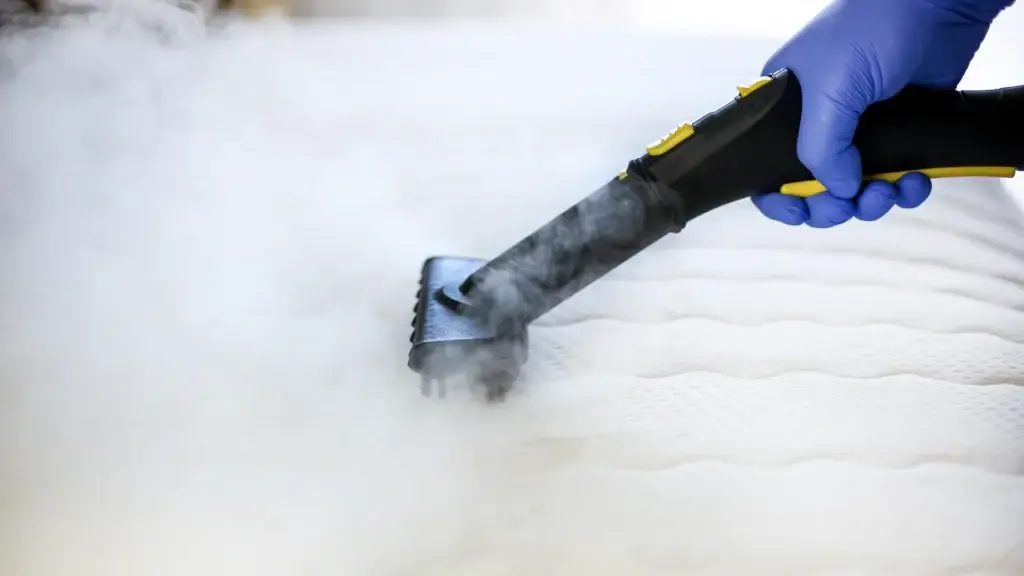
Can a mattress be steam cleaned? Steam cleaning sanitizes effectively and kills dust mites. It introduces significant moisture, so complete drying is essential. Memory foam mattresses should not be steam cleaned as the heat and moisture can degrade the foam structure. Innerspring mattresses tolerate steam better.
What causes yellow stains on a mattress? Yellow stains are typically from oxidized sweat and body oils. Hydrogen peroxide mixed with dish soap and baking soda, applied and allowed to sit before blotting, is the most effective treatment.
How do I get rid of mold smell from a mattress?Surface mold smell responds to baking soda treatment and improved ventilation. Place the mattress in an area with good airflow, apply baking soda generously, and leave for several hours. If the smell persists after treatment, it suggests mold deeper in the mattress than surface cleaning can reach, and replacement should be considered.
Does a mattress protector eliminate the need for mattress cleaning? A protector dramatically reduces the rate at which the mattress itself becomes contaminated, but it does not eliminate the need for periodic cleaning entirely. The protector itself requires regular laundering. Mattress cleaning every six to twelve months is still appropriate even with a protector in use.
Our regular cleaning service keeps your bedroom and whole home consistently clean.
A clean mattress is one part of a healthy home. If your home needs a full reset from bedroom to kitchen, Asubra’s deep cleaning service covers every room in a single thorough visit. Get your free quote for the South Shore today.