
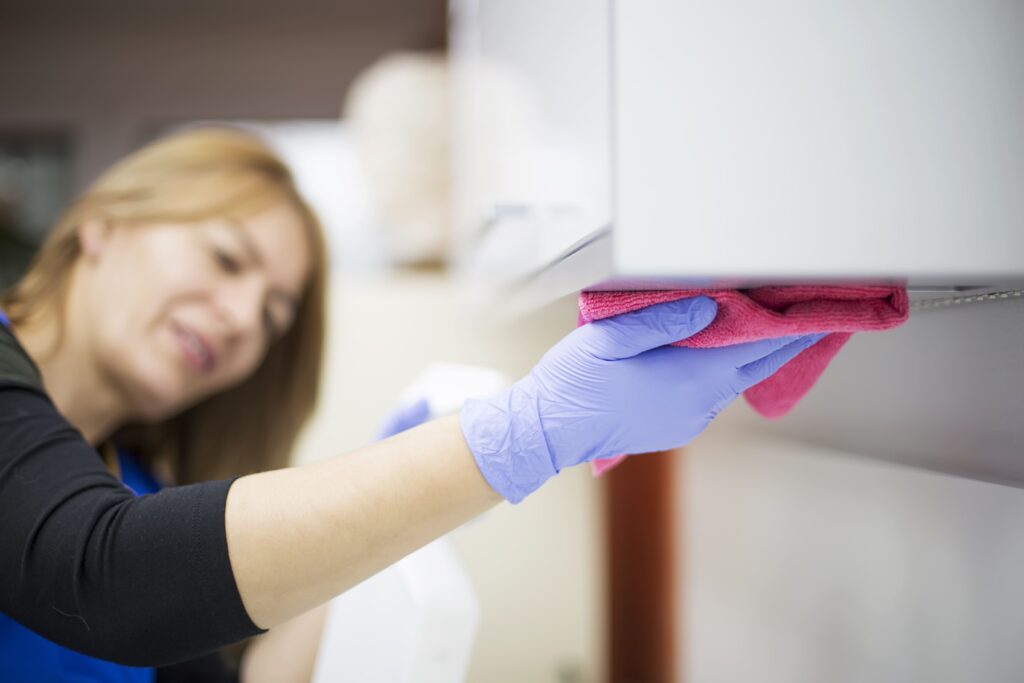
Kitchen cabinets are often the most expensive element in your kitchen, yet they are constantly exposed to steam, cooking oils, and food splatters. Cleaning them requires a delicate balance: you need to remove stubborn, sticky grease without damaging the finish—whether that’s wood stain, lacquer, or paint.
Quick Answer: The Gentle Approach
The safest way to clean cabinets is to use a damp microfiber cloth and a mild solution of warm water and a drop of dish soap. Always use low moisture to prevent warping, avoid abrasive scrubbers that can scratch finishes, and dry the surface immediately with a second, clean cloth. Never use harsh chemicals or excessive water, as these can strip finishes, cause wood to swell, or dull the luster of painted surfaces.
Identify Your Cabinet Finish First
Before you start spraying, identify what you are dealing with. Using the wrong product on the wrong finish can lead to irreversible damage:
- Painted Cabinets: These are prone to chipping. Avoid anything acidic; use only mild detergents and soft cloths.
- Stained Wood: Moisture is your enemy. Too much water can seep into the wood grain and cause warping or “clouding.”
- Laminate/Thermofoil: These are more resilient to moisture but can be scratched easily by abrasive powders or pads.
- Glossy/Lacquered: These show streaks easily. Use a high-quality microfiber and buff dry to maintain the mirror-like shine.
The Safe Cleaning Method: Step-by-Step
- Dust First: Use a dry microfiber cloth to remove loose dust. Cleaning over dust can turn it into a paste that scratches the finish.
- Dilute & Apply: Mix a few drops of a gentle, pH-neutral dish soap in warm water. Dip your cloth and wring it out until it is barely damp.
- Wipe with the Grain: If you have wood cabinets, always wipe in the direction of the grain.
- Dry Immediately: This is the most important step. Never leave cabinets air-drying. Use a clean, dry microfiber cloth to buff the surface until it is bone-dry. Leaving moisture on seams and corners is the fastest way to cause peeling.
How to Remove Sticky Grease Safely
Grease near the stove and handles is the toughest challenge. If soap and water aren’t enough:
- Localized Treatment: Mix a paste of baking soda and water. Apply it only to the greasy spot and let it sit for a minute—do not scrub hard.
- Test First: Always test in a hidden area (like the inside of a cabinet door) to ensure the paste doesn’t discolor the finish.
- High-Touch Care: Don’t forget to wipe the hardware and handles. Use a cotton swab dipped in your soapy solution to clean the crevices around the handles where grime likes to hide.
Products and Methods to Avoid
- Abrasive Sponges: Steel wool or even the green side of a standard sponge will leave micro-scratches that eventually make the cabinet look dull and make grease stick more easily.
- Vinegar: Many “natural” guides suggest vinegar, but its acidity can etch lacquers, dull painted finishes, and break down wood stains over time.
- Too Much Water: Never spray liquid directly onto the cabinets. It will run into the seams and cause the wood to expand and the joints to fail.
- Bleach or Ammonia: These are far too harsh for fine finishes and will cause discoloration or stripping.
Frequently Asked Questions
- Can vinegar damage kitchen cabinets?
Yes. Because vinegar is acidic, frequent use can dull the protective clear coat on wood and erode paint, leading to a cloudy appearance. - How often should cabinets be cleaned?
A quick wipe of high-touch handles should be done weekly. A full cabinet wipe-down should happen every 2–3 months, or whenever you notice visible buildup. - What is the safest cleaner for cabinet doors?
A mixture of warm water and a tiny amount of mild dish soap is the gold standard for virtually every cabinet finish.
Cabinet Finish Care Chart
| Finish Type | Recommended Cleaner | Safety Tip |
| Painted | Mild Soap + Water | Never scrub; use a soft touch. |
| Wood Stain | Wood-Specific Soap/Oil | Wipe with the grain; dry instantly. |
| Laminate | All-Purpose/Soap | Avoid abrasive powders. |
| Gloss/Lacquered | Water Only or Mild Soap | Buff dry to avoid water spots. |
Need professional kitchen care?
At Asubra Cleaning, we understand the science of surfaces. Our team uses finish-appropriate techniques to ensure your kitchen cabinets remain beautiful and protected. Whether it’s a routine maintenance visit or a deep-clean, we treat your home’s finishes with the care they deserve.
Click here to get your professional cleaning quote from Asubra Cleaning!