
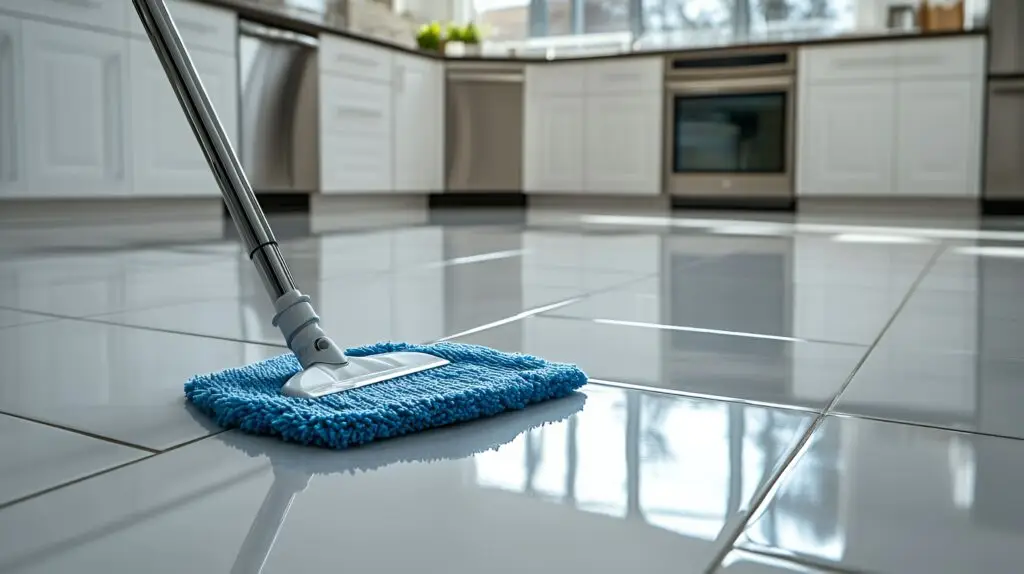
Kitchen floors face the ultimate test: dropped food, tracked-in mud, grease splatters, and heavy foot traffic. Because kitchen tile floors are typically paired with porous grout lines, the cleaning process needs to be more than just a quick wipe-down. If done incorrectly, you end up with sticky residue, cloudy tile surfaces, or dark, stained grout.
Quick Answer: The Residue-Free Routine
The best way to clean kitchen tile is to clear all loose debris first by sweeping or vacuuming, then mop using a tile-specific, pH-neutral cleaner. The secret to a streak-free shine is using less soap than you think—excess detergent creates a film that actually attracts more dirt. Always finish by drying high-traffic zones to prevent water spots, and be mindful of your grout by avoiding overly acidic cleaners that can erode it over time.
Know Your Tile: Material Matters
Before you choose your cleaner, identify what you are walking on:
- Ceramic & Porcelain: These are highly durable and water-resistant. You have the most flexibility with cleaning products here.
- Natural Stone (Marble, Travertine, Slate): Warning: These are porous and highly sensitive. Never use vinegar or harsh acidic cleaners, as they will etch and permanently damage the stone. Use a dedicated stone-safe cleaner.
- Textured/Non-Slip Tile: These surfaces trap dirt in the ridges. A soft-bristled brush or a steam mop is often more effective than a traditional string mop, which can’t reach the deep texture.
Step-by-Step Cleaning Method
- Remove Loose Debris: Never skip this. Mopping over crumbs or grit creates a “sludge” that drags across your floor and scratches the surface. Vacuuming with a soft floor setting is usually superior to sweeping.
- Spot-Treat: If you have stuck-on grease or dried spills, spray a little cleaner directly on the spot before you start the main mopping. Let it sit for a minute to lift the grime.
- Mop in Sections: Work your way out of the kitchen. Use a damp—not dripping—mop. If the mop is too wet, you’re just pushing dirty water into the grout lines, which causes them to darken over time.
- Dry Traffic Zones: If you have a busy kitchen, go over the path from the stove to the sink with a dry towel or microfiber mop head to prevent slips and water spots.
How to Clean Grout Lines
Grout is the weak point of any tile floor. It is porous and acts like a magnet for spills.
- Daily Prevention: Wipe up spills immediately. Don’t let coffee or tomato sauce sit; it will stain.
- Weekly Scrub: If your grout looks dingy, use a soft-bristled nylon brush (not metal!) and a gentle, pH-neutral tile cleaner.
- Rinse: Always rinse the area with clean water after scrubbing to remove the cleaner, as soap residue left in grout lines will turn into a dark, sticky trap for dirt.
Common Tile Floor Mistakes
- Using Too Much Soap: This is the #1 cause of sticky, “dirty-looking” floors. If you use a concentrated soap, you must rinse the floor with clean water afterward.
- Mopping Over Debris: You aren’t cleaning; you’re exfoliating your floor with grit. Always vacuum first.
- Leaving Standing Water: Moisture is the enemy of your subfloor and your grout. If water pools, soak it up immediately.
- Using Vinegar on Stone: Vinegar will destroy the finish of natural stone. Save the vinegar for your laminate or non-porous ceramic; keep it far away from marble or travertine.
Frequently Asked Questions
- Why are my tile floors sticky after mopping?
It’s almost always a “soap overdose.” You are using too much cleaner or not rinsing it away. Try mopping with just hot water, and you’ll likely see the stickiness disappear as the old soap residue is lifted. - Can vinegar be used on kitchen tile floors?
Yes, for standard ceramic or porcelain, but use it sparingly. Never use it on natural stone (marble, granite, slate) or on grout lines daily, as the acid can break down the grout cement over time. - How often should kitchen floors be mopped?
For high-traffic kitchens, a damp-mop (or a quick vacuum/mop combo) twice a week is ideal to keep the grout from becoming deeply stained.
Product Selection Table
| Tile Type | Recommended Cleaner | What to Avoid |
| Porcelain/Ceramic | pH-neutral tile cleaner | Steel wool, wax-based cleaners |
| Natural Stone | Stone-specific cleaner | Vinegar, lemon, bleach, ammonia |
| Textured/Matte | Steam mop or mild soap | Heavy wax or heavy polishes |
Need professional floor restoration?
If your grout is permanently discolored or your tiles have lost their shine, routine mopping won’t cut it. At Asubra Cleaning, we specialize in professional-grade floor care that removes years of buildup. We bring your floors back to life, making your weekly maintenance easier than ever.
Click here to get your custom floor-care quote from Asubra Cleaning!