
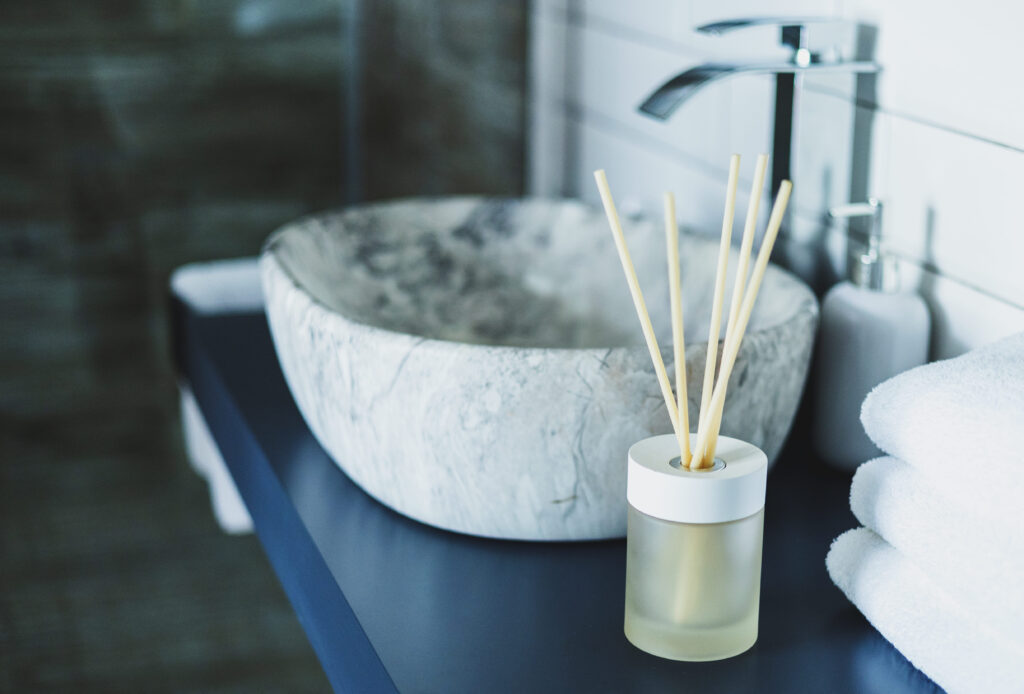
When a bathroom develops a stale, musty, or unpleasant smell, the instinctive reaction is often to reach for an aerosol air freshener or plug-in scent diffuser. However, lingering bathroom odors rarely stem from a simple lack of fragrance. Instead, they are usually warning signs of underlying moisture accumulation, trapped organic debris, or hidden buildup in drains, textiles, and hidden corners.
Spraying artificial scents over a bathroom odor is only a temporary band-aid. True freshness comes from identifying and eliminating the root source of the smell. When you clean away the actual bacteria, mildew, and residue, your bathroom will naturally smell clean, fresh, and inviting without needing chemical perfumes.
Why Bathrooms Hold Odors
Moisture allows towels, bath mats, grout, and liners to stay damp.
Bathrooms are naturally humid environments. When ventilation is poor, damp bath towels, plush bath mats, porous tile grout, and plastic shower liners retain moisture for hours, creating a breeding ground for mildew and odor-causing bacteria.
Drains, trash cans, toilets, and sink overflows can trap residue.
Hair, soap scum, body oils, and organic waste accumulate inside sink overflows, drain traps, toilet bowl rims, and bathroom trash cans, releasing subtle, persistent odors over time.
Why strong fragrances can make a bathroom smell worse instead of cleaner.
Heavy synthetic air fresheners contain volatile organic compounds (VOCs) that mix with existing musty odors and humidity. Rather than neutralizing the smell, the heavy fragrance often blends with the mildew, creating a cloying, nauseating scent.
Bathroom Odor Sources to Check First
Toilet area and base.
Splatters, historic grime around the floor bolts, and uncleaned porcelain rims can harbor persistent bathroom smells. For effective removal of tough stains that cause odors, review our guide on toilet bowl stain cleaning.
Sink drains and overflow holes.
Sink overflow channels rarely dry out completely, allowing hair and soap residue to decay inside the walls of the pipe and generate hidden odors every time you turn on the faucet.
Shower curtains, liners, and bath mats.
Plastic shower liners develop pink slime and mildew along their bottom hems. Routine maintenance like shower curtain liner cleaning helps eliminate this major source of bathroom mustiness.
Trash can and under-sink cabinet.
Bathroom trash bins—especially those without lids—trap discarded cosmetic wipes, damp cotton balls, and paper products. Meanwhile, unventilated under-sink cabinets can lock in dampness from minor plumbing leaks.
When a smell may indicate mold, plumbing, or ventilation problems.
If a sewage-like odor persists, you may have a dry plumbing P-trap or a venting issue. If you notice a persistent earthy mustiness despite deep cleaning, hidden black mold behind drywall or under subfloors may require professional remediation.
Step-by-Step Bathroom Freshening Routine
Ventilate the room before and after cleaning.
Open your windows or turn on your exhaust fan during and for at least 20 minutes after your cleaning session to flush out humid air and cleaning fumes.
Clean the toilet, sink, shower, fixtures, and floor.
Scrub all porcelain, stainless steel, and tiled surfaces thoroughly. For deep-seated grime and soap scum on floors and walls, utilize techniques detailed in bathroom tile cleaning.
Wash towels and bath mats regularly.
Launder bath towels after 3 to 4 uses and wash fabric bath mats weekly in hot water to kill odor-causing bacteria.
Empty trash and wipe the bin.
Empty your bathroom trash can weekly, and wash the interior bin with warm soapy water and a disinfectant spray to eliminate lingering organic odors.
Use a mild products that clean residue instead of covering odors.
Opt for natural cleaning agents like baking soda, hydrogen peroxide, and mild dish soap to break down organic buildup safely without introducing harsh synthetic perfumes.
Simple weekly bathroom odor checklist.
- [ ] Empty and sanitize the bathroom trash can
- [ ] Wash bath towels and hang them loosely to dry completely
- [ ] Run the exhaust fan during and after every shower
- [ ] Scrub the toilet bowl, seat hinges, and exterior base
- [ ] Wipe down counters, sinks, and faucets
Note: Use safety-first language and avoid recommending risky chemical mixtures.
Safety Reminder: Never mix bleach with ammonia, vinegar, or toilet bowl cleaners, as this creates toxic, dangerous chlorine gas. Always ventilate your space when using cleaning products.
How to Prevent Bathroom Odors
Improve airflow after showers.
Leave your bathroom door and shower curtain wide open after bathing, and run your exhaust fan for at least 20 minutes to pull trapped humidity out of the room.
Keep textiles dry.
Never toss damp towels into a laundry hamper or fold them while slightly wet; always hang them up on bars or hooks where air can circulate freely.
Clean high-moisture areas weekly.
Wiping down shower walls with a squeegee and keeping your floors dry prevents mildew from gaining a foothold.
When Professional Cleaning Helps
Maintaining a permanently fresh bathroom requires consistent effort. When life gets busy, partnering with Asubra Cleaning ensures your high-moisture rooms, fixtures, floors, and toilets remain spotless and odor-free. Incorporating our professional deep cleaning service into your home maintenance routine guarantees that hidden buildup is expertly managed year-round. Contact us!
FAQ
How do I make my bathroom smell fresh naturally?
You can keep your bathroom naturally fresh by maintaining clean drains, washing towels weekly, improving ventilation, using baking soda for odor absorption, and keeping surfaces free of soap scum and mildew.
Why does my bathroom smell even after cleaning?
If your bathroom still smells after a surface clean, the odor is likely trapped inside hidden areas such as sink overflow holes, drain P-traps, unwashed bath mats, or deep mildew in tile grout.
How often should bathroom towels be washed?
Bathroom bath towels should be washed every 3 to 4 uses to prevent bacteria and musty mildew odors from taking over the fabric.