
Every time your heating or cooling system kicks on, air circulates through your home’s ductwork and out through supply and return vents. Over time, these grilles act as magnets for floating particles, accumulating visible dust, lint, pet hair, and airborne debris. If left uncleaned, that buildup gets blown right back into your living spaces, settling on freshly cleaned furniture and floors.
Note: This guide focuses strictly on cleaning and maintaining the accessible surface vent covers and grilles in your home. It does not cover internal HVAC ductwork cleaning, mechanical repairs, or professional duct sanitization.
Why Air Vents Get Dusty
Airflow pulls dust, hair, fibers, and particles toward return grilles.
Air circulation is a continuous cycle. As air is pulled through return grilles and pushed out through supply vents, microscopic fibers, clothing lint, and household dust inevitably cling to the slats and edges of the vent covers.
Homes with pets, carpeting, open windows, or heavy foot traffic may see buildup faster.
If your household includes shedding pets, plush wall-to-wall carpeting, or family members who love keeping windows wide open on breezy days, your vents will collect dust and debris at a much faster rate.
Why dust returns quickly when floors, baseboards, and vents are not cleaned together.
Dust is a connected ecosystem within your home. If you clean your air vents but leave dusty baseboards, dirty floors, or unvacuumed rugs, foot traffic and air currents will quickly kick that settled grit right back up into the air, where your HVAC system will pull it straight back onto your clean vents.
How to Clean Air Vents Safely
Turn off airflow before cleaning visible vent covers when possible.
Before you begin, switch off your HVAC system at the thermostat. This prevents dust from blowing into your face or getting sucked deeper into the ductwork while you work.
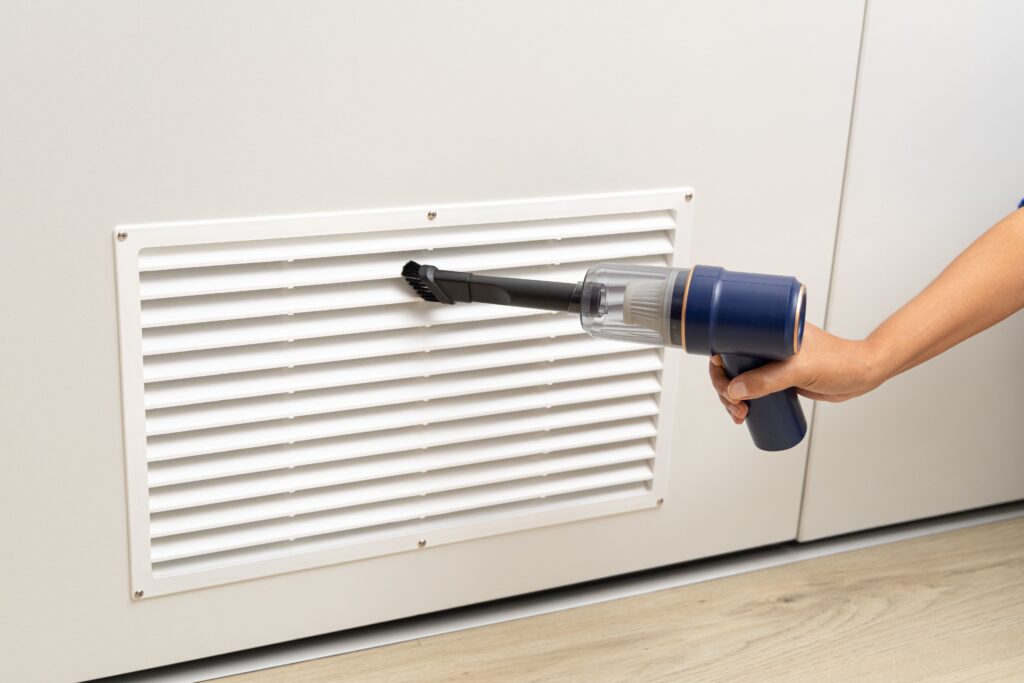
Vacuum the grille with a brush attachment.
Attach a soft-bristled brush tool to your vacuum cleaner and gently glide it across the vent slats to capture loose dust, cobwebs, and pet hair without scratching the finish.
Wipe the cover with a damp microfiber cloth.
Lightly dampen a microfiber cloth with water or a mild surface cleaner. Wipe down each individual slat, removing stubborn oily dust film and stubborn grime.
Use a soft brush for narrow slats and corners.
For tight, hard-to-reach grille slats, wrap your microfiber cloth around a butter knife or use a small artist’s paintbrush to lift trapped dust out of the corners.
When to remove vent covers and when to avoid doing it.
If stubborn grime has built up inside the edges, you can unscrew standard wall or ceiling vent covers and wash them in warm, soapy water. Avoid removing heavy floor registers if they are rusted into place or if you suspect delicate duct connections underneath.
Safety note: avoid spraying liquids into vents or electrical components.
Never spray liquid cleaner directly into an open air vent. Excess moisture can drip onto electrical wiring, rust metal duct joints, or encourage mold growth inside your walls. Always spray your cloth, not the vent.
Note: Keep recommendations practical for homeowners while suggesting a professional HVAC provider for deeper duct concerns.
Routine surface cleaning keeps your visible vents looking immaculate and dust-free. However, if you notice deep-seated debris miles down inside your ductwork or suspect mold within your HVAC system, consult a licensed HVAC contractor for specialized duct cleaning services.
How to Reduce Dust Around Vents
Dust from top to bottom before vacuuming floors.
Always follow a top-down cleaning order. Dust ceiling fans and high shelves first so falling particles land on the floor, where they can be vacuumed up last using effective methods outlined in 5 Powerful Dust Control Cleaning Tips.
Change HVAC filters according to manufacturer guidance.
Your HVAC filter is your home’s primary defense against airborne dust. Inspect your filter every 30 to 60 days—especially during peak heating and cooling seasons—and replace it regularly to keep airflow clean and efficient.
Keep nearby floors, baseboards, and furniture dust-free.
Reducing the total amount of loose dust in your living spaces directly reduces how much debris gets pulled into your return vents. Regular housekeeping strategies, such as those recommended in How to Rid Dust Mites From Your Home, help minimize overall household allergens.
How recurring cleaning supports lower visible dust levels.
Consistency is the secret to a dust-free home. Pairing regular filter changes with scheduled surface dusting prevents heavy allergen accumulation.
When Professional House Cleaning Helps
Keeping every corner of your home dust-free can be a demanding chore. At Asubra Cleaning, our comprehensive professional deep cleaning pages highlight how our expert team tackles hard-to-reach surfaces, baseboards, blinds, and high-traffic floors that contribute to overall household dust. Let us help you maintain a pristine, breathable home year-round!
FAQ
How often should air vents be cleaned?
You should vacuum and wipe down your accessible air vents every 1 to 3 months, or more frequently if you have pets, allergies, or live in a dusty environment.
Can dusty vents make a room dusty?
Yes. When dust and lint accumulate on vent grilles, the airflow passing over them picks up those particles and disperses them right back out into your rooms, settling on your furniture and floors.
Should I spray cleaner inside an air vent?
No. You should never spray liquids directly into an air vent because excess moisture can damage duct seams, rust metal components, and foster mold growth. Always apply cleaning solutions to a cloth instead.