
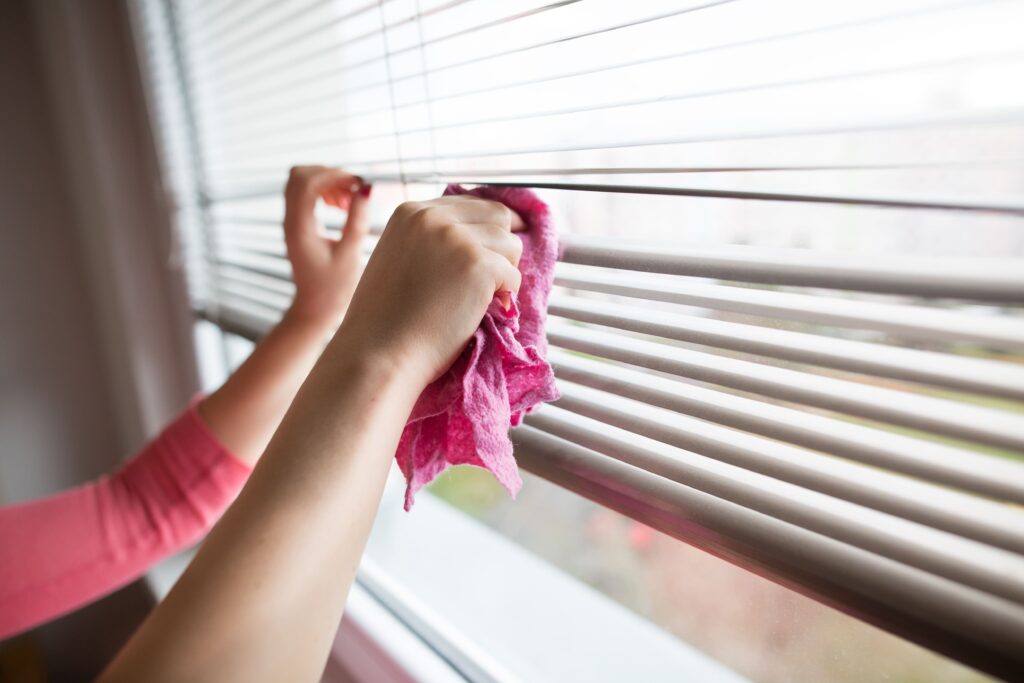
Window blinds are fantastic for controlling light and privacy, but they are also notorious dust magnets. Because each individual slat sits horizontally like a miniature shelf, they effortlessly trap floating dust, pet hair, and pollen. For many homeowners, the thought of cleaning blinds feels deeply tedious, often leading to them being pushed to the very bottom of the cleaning checklist.
You don’t need to struggle with taking down heavy hardware or soaking your blinds in the bathtub to get them spotless. With the right technique and tools, you can clean your blinds quickly and thoroughly while they hang right on the window.
Why Blinds Collect So Much Dust
Horizontal slats act like shelves for dust, pollen, pet dander, and lint.
As air circulates through your home, airborne particles naturally settle onto horizontal surfaces. Window blinds take the brunt of this accumulation, forming a fine, gray layer of dust across every single slat within just a few weeks.
Open windows and ceiling fans can make buildup worse.
If you love letting in a coastal breeze through open windows or run your ceiling fans constantly, dust and outdoor pollen are whipped directly against your window treatments, accelerating grime accumulation.
Why dusty blinds can make a clean room feel unfinished.
You can mop your floors, scrub your counters, and make your bed to perfection, but if your blinds are caked in a layer of gray dust, the entire room will still look dull and unkempt.
Best Tools for Cleaning Blinds
Microfiber cloths or microfiber gloves.
Microfiber is essential because its microscopic fibers grab and hold onto dust rather than just pushing it into the air or smearing it around. Wearing microfiber cleaning gloves makes wiping individual slats remarkably fast.
Vacuum brush attachment.
A soft-bristled vacuum attachment is ideal for sucking up loose dust before you introduce any damp wiping.
Extendable duster for tall windows.
For high-set windows, a long-handled, flexible microfiber duster saves you from dangerous stretching or balancing on step stools.
Mild cleaner for washable surfaces only.
A gentle mixture of warm water and a drop of dish soap helps tackle sticky fingerprints on vinyl or faux wood without stripping finishes.
Tools to avoid because they bend slats or push dust into the air.
Avoid using stiff feather dusters (which scatter dust into the air rather than capturing it) or coarse scrubbing sponges that can scratch and bend delicate aluminum or vinyl slats.
Step-by-Step Cleaning Method
Close the blinds in one direction and dust from top to bottom.
Tilt your blinds downward so the slats overlap like shingles. Starting at the very top, wipe across each slat from left to right, working your way down to the bottom sill.
Reverse the slats and repeat on the other side.
Flip the blinds in the opposite direction so the reverse side of the slats is exposed, and repeat the wiping process from top to bottom.
Vacuum nearby sills and floors after dusting.
Gravity ensures that a significant portion of the loosened dust will fall directly onto the window sill and floor. Vacuum these areas immediately using effective methods outlined in 5 Powerful Dust Control Cleaning Tips.
Spot clean fingerprints or sticky residue carefully.
For stubborn smudges, lightly dampen a microfiber cloth with your mild soap solution, support the slat with one hand, and gently wipe the spot clean.
How to clean wood, faux wood, vinyl, and fabric blinds differently.
- Real Wood Blinds: Never use excess water or harsh chemical cleaners, as moisture will warp and crack natural wood. Use a dry microfiber cloth or a specialized wood cleaner.
- Faux Wood & Vinyl Blinds: These moisture-resistant materials can handle damp wiping with soapy water for a deeper clean.
- Fabric Blinds: Use a low-suction vacuum attachment with a brush roll to gently lift dust without fraying the fabric.
Quick maintenance routine for weekly dusting.
Give your blinds a quick swipe with a microfiber duster or glove once a week during your normal house-tidying routine to prevent heavy buildup.
Note: Recommend deeper hand-wiping during seasonal or deep cleaning appointments.
While quick weekly dusting keeps loose particles at bay, more thorough hand-wiping of every individual slat is best reserved for seasonal refreshes or comprehensive cleaning visits.
Common Blind Cleaning Mistakes
Using too much water on wood blinds.
Drenching real wood blinds with water will cause the wood to swell, warp, and ruin the stain. Always keep moisture to an absolute minimum on wood surfaces.
Pressing too hard on thin slats.
Applying heavy pressure can permanently bend aluminum or thin vinyl slats, leaving unsightly creases across your window treatments.
Dusting after vacuuming the room.
Always dust your blinds before you clean your floors and carpets. If you vacuum first, falling dust from your blinds will ruin your freshly cleaned floors.
When Professional Cleaning Helps
Keeping every detail of your home immaculate—from high windows and ceiling fans to baseboards and delicate blinds—requires time and precision. Incorporating professional house cleaning into your routine helps reduce overall allergen accumulation, supporting methods similar to those discussed in our guide on how to rid dust mites from your home. For a truly comprehensive home reset, our specialized deep cleaning services ensure that high-touch and neglected detail areas are handled to perfection.
FAQ
What is the fastest way to clean blinds?
The fastest method is using a soft-bristled vacuum brush attachment to suck up loose dust, followed by a quick pass with microfiber cleaning gloves while the blinds are closed flat.
Should you clean blinds with water?
You can clean vinyl, plastic, and faux wood blinds with a damp cloth and mild soap. However, you should use only dry dusting methods on real wood or fabric blinds to prevent warping and water damage.
How often should blinds be dusted?
You should lightly dust your blinds once a week to prevent heavy particle buildup, with a more detailed damp wipe performed seasonally.