
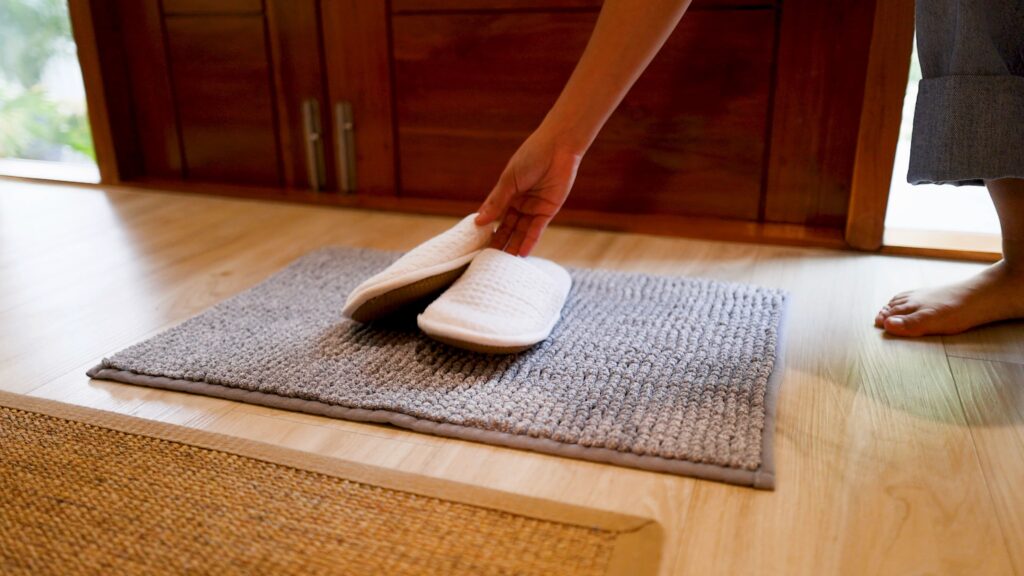
Your home’s entryway is the ultimate high-traffic bottleneck. Because every family member, guest, delivery person, and family pet passes through the exact same confined space, it acts as a magnet for outdoor debris. Shoes track in dirt, packages leave scuffs, and open doors let in windblown dust and leaves, making the mudroom or foyer one of the fastest-soiling areas in the house.
Stopping dirt right at the threshold is the single most effective way to cut down on your overall household chores. When you keep your entryway clean and contained, you prevent outdoor grit from migrating onto your main living room carpets and kitchen floors, keeping your entire home cleaner with minimal effort.
Why Entryways Make the Whole Home Dirtier
Shoes carry grit, moisture, pollen, salt, sand, and outdoor debris inside.
Every time someone steps across your threshold, the soles of their shoes deposit whatever they’ve picked up outside—whether that is dry summer sand, spring pollen, autumn leaves, or abrasive winter road salt.
Loose dirt spreads quickly to floors, rugs, stairs, and nearby rooms.
Foot traffic acts like a conveyor belt. Unchecked dirt in the foyer gets crushed into microscopic particles under shoes and is carried on socks and paws directly into hallways, kitchens, and carpeted staircases, dulling finishes and wearing down floor fibers prematurely.
Why South Shore homes may see extra moisture, sand, and seasonal debris.
Homes along the South Shore face unique coastal and regional challenges. Between ocean humidity, coastal sand, frequent rainstorms, and dropping winter slush, local entryways take a beating from moisture and grit that require extra diligence to keep under control.
Step-by-Step Entryway Cleaning Routine
Shake out or vacuum door mats and area rugs.
Start from the top down and outside in. Take your outdoor and indoor mats outside to vigorously shake them out, or use a vacuum attachment to suck up trapped sand and dried mud.
Sweep or vacuum corners, thresholds, and base areas.
Use a broom or a vacuum crevice tool to clear out stubborn grit tucked tightly into door tracks, corners, and along baseboards where dust bunnies love to hide.
Wipe door frames, handles, and nearby switches.
Entryway doors are touched constantly. Use a damp microfiber cloth and all-purpose cleaner to sanitize door handles, deadbolts, light switches, and the upper edges of door frames.
Clean hard floors with a surface-safe method.
Mop or wipe down hard flooring surfaces using the specialized techniques recommended in The Definitive Floor Care Guide to protect hardwood, tile, or vinyl from moisture damage.
How to dry the area quickly to prevent footprints and residue.
Always follow up damp mopping with a dry microfiber cloth or flat-head mop to buff hard floors dry instantly, preventing water spots, slippery spots, and fresh footprints.
Small tool list: microfiber cloth, vacuum attachment, broom, mop, mat cleaner, and trash bag.
- Broom and dustpan (or vacuum with hard-floor attachment)
- Microfiber cloths for dusting and wiping
- Surface-safe floor cleaner and mop
- Outdoor mat cleaner or hose
- Trash bag for discarded debris and clutter
Note: Keep the method simple enough for weekly maintenance between professional visits.
You don’t need a massive time commitment to keep this space tidy. Committing just 10 to 15 minutes a week to this routine maintains a welcoming, spotless entryway between deeper housekeeping visits.
How to Prevent Dirt From Spreading
Use two mats: one outside and one inside.
The two-mat system is a game-changer. An abrasive scraper mat outside catches large mud chunks and heavy dirt, while an absorbent textile mat inside traps moisture and fine dust before shoes hit your main floors.
Create a shoe drop zone or basket system.
Designate clear boundaries for footwear. Placing a tiered shoe rack, a large boot tray, or a decorative basket right by the door encourages family members to remove shoes instantly upon entry.
Clean pet paws and leashes near the entry.
Keep a designated towel or pet-wiping station near the front or back door so you can quickly wipe muddy paws before your dog steps foot onto clean floors.
How often to wash mats during rainy or snowy months.
During wet spring rains or heavy winter weather, wash or shake out your entryway mats at least once a week. When mats become saturated, they lose their ability to trap moisture and can actually trap dampness against your flooring.
When Professional Cleaning Helps
Even with the best prevention strategies, high-traffic entryways accumulate stubborn scuffs, ground-in salt stains, and baseboard dust over time. Utilizing professional Maintenance Cleaning ensures that your home’s transition zones receive the thorough attention they need, working in tandem with your dust control cleaning tips to keep your entire living space pristine year-round.
FAQ
How often should you clean an entryway?
You should do a quick sweep and mat shakeout 1 to 2 times a week, with a more thorough mopping and disinfecting of handles and baseboards bi-weekly.
What is the best way to keep dirt from coming inside?
Implementing a strict “no shoes inside” policy paired with a high-efficiency dual-mat system (one scraper mat outside, one absorbent mat inside) is the most effective way to stop dirt at the door.
Should you vacuum or sweep entryway floors first?
Vacuuming is generally better for entryways because it extracts fine sand, grit, and dust out of grout lines and floor cracks rather than kicking dust particles up into the air like sweeping can.