
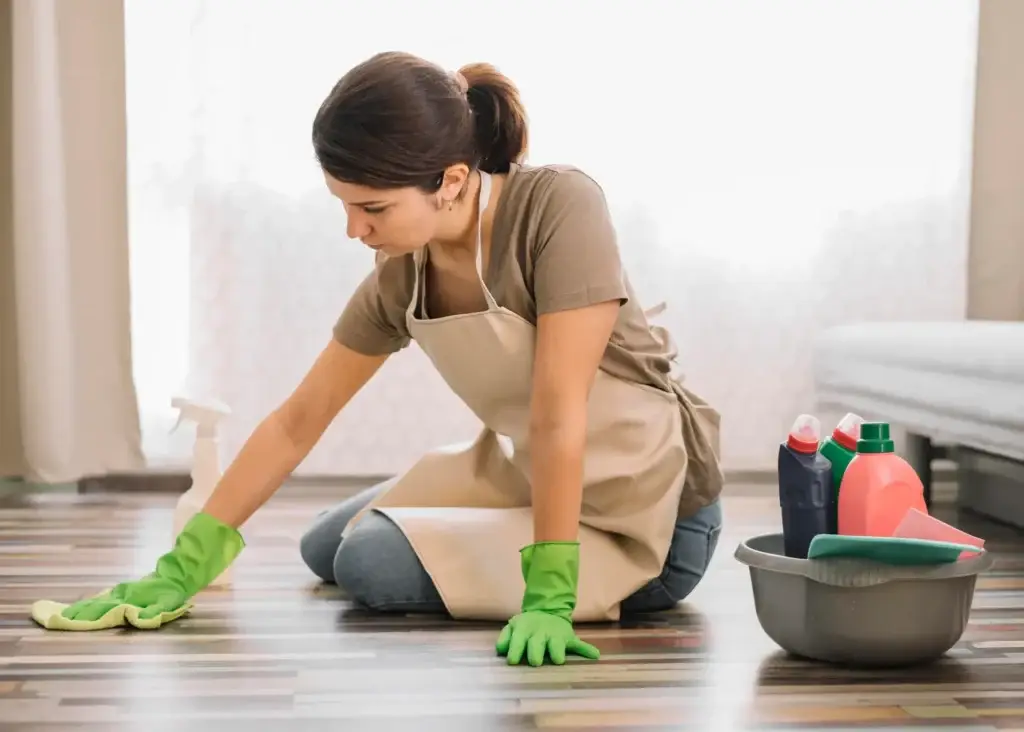
A kitchen oil spill can be a slippery and messy problem. Acting quickly is key to preventing accidents and keeping your floors in great condition. Here’s a step-by-step guide to cleaning up that mess.
Why Oil Spills Are Hazardous
Slip and Fall Risks
The most immediate danger of an oil spill is the risk of slipping and falling. Oil creates a slick surface that can cause serious injury.
Stains and Lingering Odors
If left unaddressed, oil can seep into porous floor materials, leading to permanent stains and a persistent, unpleasant odor in your kitchen.
Immediate Steps to Take
Blot Excess Oil
Before you do anything else, use paper towels or an old cloth to blot up as much of the excess oil as possible. Do not wipe or smear the oil, as this will only spread it further. Press down firmly to absorb the liquid.
Sprinkle Absorbent Materials
Once you’ve blotted the surface, it’s time to use an absorbent material to soak up the remaining oil. Sprinkle a generous amount of baking soda, cornstarch, or even flour directly onto the spill. Let it sit for at least 15-20 minutes. You’ll see the powder clump as it absorbs the oil.
Cleaning by Floor Type
After the absorbent material has done its job, sweep or vacuum it up. Now you can move on to a deeper clean tailored to your specific floor type.
Tile Floors
For tile, use a mixture of dish soap and warm water. The soap’s degreasing properties are perfect for cutting through the remaining oily residue. Use a scrub brush to agitate the area, then wipe it clean with a damp cloth.
Hardwood Floors
Hardwood requires a gentler approach. Avoid harsh chemicals and excessive water. Use a cleaner specifically designed for hardwood floors and a soft cloth to gently wipe the area. For stubborn spots, a small amount of dish soap diluted in water can be used, but be sure to wipe it dry immediately.
Vinyl or Laminate Floors
These durable floors can handle a soap and water solution. A mop or sponge with a cleaner made for these surfaces works well. Make sure to rinse the area thoroughly to prevent a sticky residue.
Final Disinfection & Odor Removal
Soap and Warm Water
After the initial cleaning, a final wipe-down with warm water and soap will ensure no greasy residue is left behind.
Vinegar Rinse (Non-Wood Floors)
For non-wood floors, a quick rinse with a solution of white vinegar and water can help to remove any lingering odors and leave the floor sparkling.
Prevention Tips
Use Mats Near Cooking Areas
Placing mats or rugs in high-traffic cooking areas can help catch spills before they hit the floor.
Quick Response to Spills
The best way to handle an oil spill is to deal with it immediately. The longer the oil sits, the more likely it is to stain and become a hazard.
Do you need help with a different type of stain or a different cleaning task?