
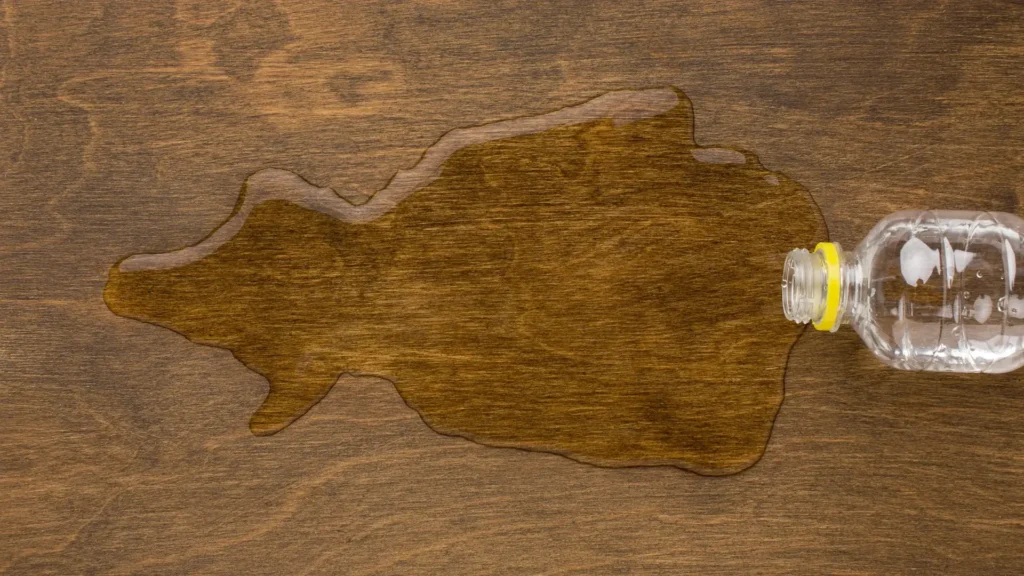
A glass left on a coffee table, a damp towel on a shelf: knowing how to remove water stains from wood correctly saves both the surface and hours of unnecessary work., a houseplant that leaked: these small moments leave marks that look permanent but usually are not. Knowing how to remove water stains from wood correctly depends on one thing: identifying what type of stain you are dealing with before you apply anything to the surface.
The right method to remove water stains from wood takes minutes when you identify the stain type correctly. The wrong method can turn a faint white ring into a visible scratch or a permanently dull patch. This guide covers both stain types, the tools you already have, and the exact steps that professionals use on residential wood furniture and floors.
White ring or dark stain: the first step to remove water stains from wood
Before you attempt to remove water stains from wood, identify the color. It tells you how deep the damage goes.
White or gray rings and haze are surface stains. The moisture has penetrated the finish layer (varnish, lacquer, or polyurethane) but not the wood itself. These are the most common water stains and respond well to heat, oil, or mild abrasion. Most disappear entirely with the right method.
Dark brown or black stains have gone through the finish and into the wood fiber. The color comes from tannins in the wood reacting with minerals in the water, or from mold that has colonized the grain. These are harder to address and often require sanding or chemical bleach.
The rule to how to remove water stains from wood: white means the finish is intact. Dark means the wood is affected. Start by identifying the color, then choose the method below.
How to remove water stains from wood: white rings and haze
Heat method: how to remove water stains from wood quickly
Heat is the fastest way to how to remove water stains from wood when the stain appeared recently. The white color is trapped moisture inside the finish, and gentle heat draws it out.
Steps:
- Lay a clean, dry cloth flat over the stain
- Set a clothes iron to low heat with steam completely off
- Press the iron onto the cloth for 5 to 10 seconds
- Lift, check the stain, and repeat
Keep the iron moving. Never hold it in one spot for more than 10 seconds. A hairdryer at medium heat, held 4 to 6 inches from the surface and moved in slow circles, works with less risk for beginners.
Professional cleaners who regularly teach how to how to remove water stains from wood consistently find that white rings less than 48 hours old respond to heat in one or two passes. Older rings need more contact time or a different approach.
Oil and fat method to remove water stains from wood that are older
Mayonnaise, petroleum jelly, and coconut oil are among the most effective ways to how to remove water stains from wood when the ring has aged.: the fat penetrates the finish and displaces the trapped moisture that creates the white color.
Steps:
- Apply a generous amount directly to the stain
- Cover lightly with plastic wrap to slow evaporation
- Leave overnight, or at minimum 3 to 4 hours
- Wipe away and buff with a clean, dry cloth
This method to how to remove water stains from wood furniture is most effective on rings that have been sitting for more than two days. For large areas of white haze across a tabletop, petroleum jelly left for a full 24 hours produces the most consistent results in professional practice.
Toothpaste and baking soda to remove water stains from wood finish
Non-gel white toothpaste mixed with baking soda creates a paste that helps how to remove water stains from wood at the finish layer. creates a mildly abrasive paste that removes the stained top layer of the finish without cutting deeply into it.
Steps:
- Mix equal parts toothpaste and baking soda
- Apply to the stain and rub gently with a soft cloth, moving with the wood grain
- Wipe clean and buff
Use this approach only after heat and oil have not produced results. It removes a thin layer of finish, so it is not appropriate for antique pieces or any surface with original or delicate finish work.
Fine steel wool: the last resort to remove water stains from wood finish
0000-grade steel wool is the most abrasive approach to how to remove water stains from wood at the surface level. the stained finish layer when other methods have not worked.
Steps:
- Dip 0000 steel wool in mineral spirits
- Rub very lightly in the direction of the wood grain
- Wipe clean with a dry cloth
- Apply furniture polish to restore the sheen
This approach removes more finish than toothpaste paste and should be used only as the final step before sanding.
How to remove water stains from wood: dark marks in the grain
Dark stains that have penetrated the wood require a different approach to how to remove water stains from wood than surface methods provide. That means stripping the finish from the affected area first.
Oxalic acid: how to remove water stains from wood at the grain level
Oxalic acid is the professional standard to how to remove water stains from wood when the discoloration is in the grain itself. It is sold as wood bleach at hardware stores. It lightens the iron and tannin compounds responsible for most dark water discoloration without damaging sound wood fiber.
The USDA Forest Products Laboratory, one of the leading authorities on wood science in the United States, identifies oxalic acid as one of the safest and most effective bleaching agents for iron and water staining in wood.
Steps:
- Strip or sand the finish from the affected area down to bare wood
- Mix oxalic acid crystals in hot water per the package directions
- Apply to the stained area and allow 20 to 30 minutes of contact
- Neutralize with a baking soda and water solution
- Allow to dry completely
- Sand lightly and refinish to match the surrounding surface
Wear gloves and work with ventilation. Oxalic acid is an irritant on skin and eyes. For large areas or valuable pieces, a professional furniture restorer is the right choice.
Sanding and refinishing to remove water stains from wood permanently
When bleaching does not produce an acceptable result and you still need to how to remove water stains from wood,, sanding to bare wood and applying a new finish is the most reliable final option. This is time-intensive but produces a professional finish. For heirloom furniture or large floor areas, this work is best handled by a specialist.
How to remove water stains from wood floors
The approach to how to remove water stains from wood on floors follows the same logic as furniture, but the approach varies slightly.
For white haze on a finished floor, the heat method using an iron and cloth is safe on most polyurethane-finished floors. Move carefully and test on a hidden area first.
For dark stains on wood floors, the stain is almost always in the wood fiber and requires sanding. A spot sand of the affected area and a fresh coat of finish applied to match the surrounding floor is the standard professional approach. Trying to bleach through a finished floor without sanding first rarely produces even results.
Errors that make it harder to remove water stains from wood
Many people make the problem worse before they make it better. These errors are the most common reason attempts to how to remove water stains from wood fail. The most common mistakes:
- Applying water or a wet cloth to a water stain. Adding moisture worsens the stain and delays treatment.
- Using furniture polish on a stain before treating it. Polish seals the surface and traps moisture further into the finish.
- Scrubbing vigorously across the grain. Abrasion across the grain scratches the finish and adds visible damage.
- Using bleach on a white ring. Bleach is not a moisture remover and can discolor or damage the finish.
- Applying oil to a dark stain. Oil treatments work on white stains in the finish layer only. Dark stains in the wood need acid or sanding.
How to prevent needing to remove water stains from wood
Once you know how to remove water stains from wood, the goal is not needing to do it again:
- Use coasters consistently under glasses, mugs, and bottles
- Place cork mats or felt pads under houseplants
- Wipe up spills within seconds, not minutes
- Apply paste wax or furniture oil every 3 to 6 months to maintain the protective finish
- Keep indoor humidity between 30% and 50% to reduce condensation on cold surfaces
What professional cleaners observe about water stains on wood
Professional residential cleaners frequently encounter water stains when asked how to how to remove water stains from wood in kitchens and living rooms. when deep cleaning kitchens and living spaces. The most common finding is that homeowners who could not how to remove water stains from wood had applied the wrong product type to the wrong stain color. without identifying the stain type first and have applied vinegar or multi-surface sprays that dull the finish around the stain. Starting with correct identification saves both time and the surface finish.
For homes that need a full reset, Asubra’s deep cleaning service covers wood floors, furniture surfaces, and every detail in between. To keep wood surfaces consistently maintained after a deep clean, our regular cleaning service handles your home on a schedule that fits your life. Get a free quote for your South Shore home today.
Frequently asked questions
How do you remove water stains from wood furniture without damaging the finish? To how to remove water stains from wood furniture without damaging the finish, start with the heat method: a dry cloth and a low-heat iron pressed for 5 to 10 seconds at a time. If the stain persists, try petroleum jelly left overnight. Use abrasive methods like baking soda paste or steel wool only if heat and oil have not worked, and always move with the grain.
Can you remove water stains from wood floors without sanding? White haze stains on finished floors often respond to the method used to how to remove water stains from wood furniture: heat via an iron and cloth. Dark stains that have penetrated the floor boards almost always require sanding, because they are in the wood fiber and no surface treatment reaches them effectively.
What removes old water stains from wood? Old white stains respond best to petroleum jelly or mayonnaise left on for 8 to 24 hours. Old dark stains require the finish to be stripped from the affected area before applying oxalic acid to the bare wood. The older the stain, the more preparation time the wood needs.
Does vinegar remove water stains from wood? Diluted vinegar is sometimes suggested, but it can strip wax finishes and dull polyurethane over time. The heat and oil methods are safer for finished wood. Reserve vinegar for unfinished or naturally oiled surfaces where the risk to the finish is lower.
How long does it take to remove water stains from wood surfaces? Fresh white rings often respond to heat within minutes. Older white stains may need an overnight oil treatment. Dark stains requiring oxalic acid and refinishing can take a full day or more depending on drying times.
The simple rule for how to remove water stains from wood
Knowing how to how to remove water stains from wood comes down to one rule:: match the method to the stain. White in the finish means heat and oil. Dark in the wood means bleach or sanding. Apply the least invasive approach first, work with the grain, and test on a hidden area when using anything abrasive. Most marks that look permanent are not. You can how to remove water stains from wood in most cases when the right method is applied with patience. with patience at the right stage.